
Materials-focused guide
Best Non-Toxic Slow Cooker: 7 Material-Conscious Picks
The 360 Cookware six-quart set uses uncoated stainless steel, while Instant and GreenPan provide more affordable multi-function alternatives.
“Non-toxic” is shopping shorthand, not a scientific certification. We looked for clear food-contact material disclosures and ignored vague health promises.
Quick comparison
| Product | Food-contact pot | Best for | Main drawback |
|---|---|---|---|
| 360 Cookware 6 Quart Slow Cooker Set | Uncoated stainless steel | Avoiding nonstick coatings | Very expensive |
| Instant Pot Duo 6QT | 18/8 stainless steel | Best value and versatility | Different slow-cook behavior |
| GreenPan Elite 14-in-1 6QT Slow Cooker | PFAS-free ceramic coating | Easier release and cleanup | Still coated |
| Instant Pot Duo Plus 8QT | Stainless inner pot | Large batches | Bulky |
| Crock-Pot 7-Quart Cook & Carry | Traditional stoneware crock | Familiar slow cooking | Glazed crock is not uncoated steel |
| Crock-Pot 8-Quart Programmable Slow Cooker | Traditional stoneware crock | Batch cooking | Large footprint |
| Ninja Foodi PossibleCooker Pro 8.5QT | Coated cooking pot | Searing and versatility | Coated rather than uncoated |
Best uncoated option: 360 Cookware 6 Quart Slow Cooker Set
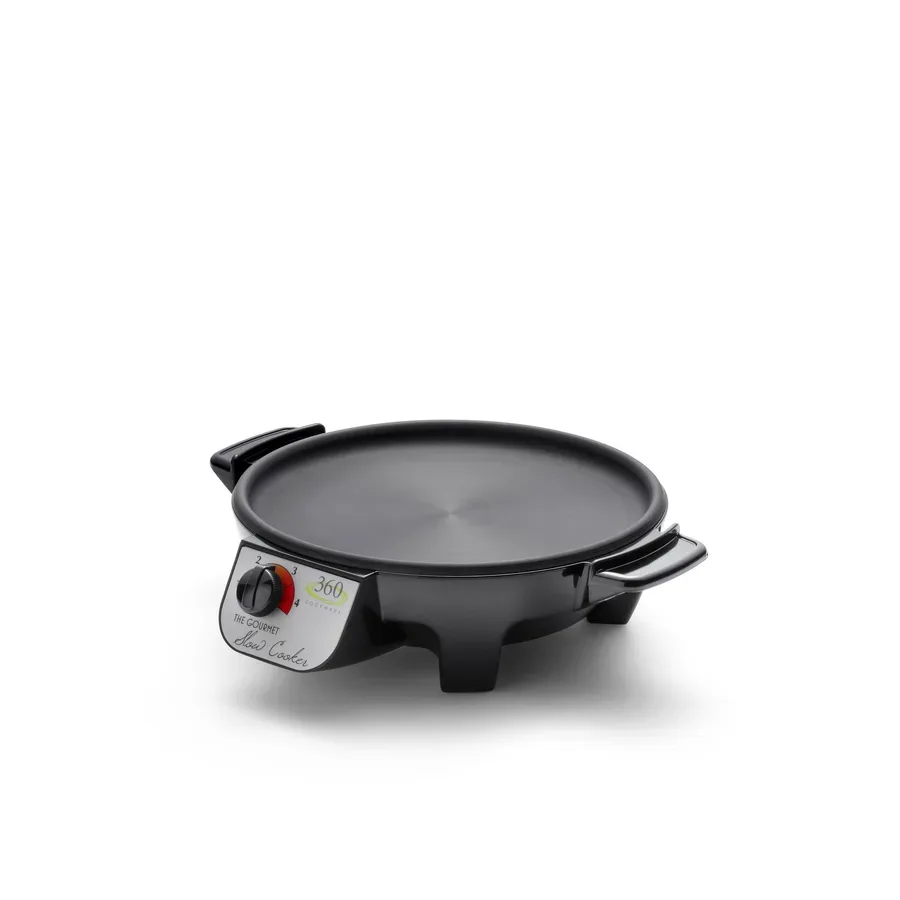
Buyers who want the food-contact surface to be uncoated should start with the 360 Cookware 6 Quart Slow Cooker Set. The American-made six-quart stainless steel pot sits on a four-setting electric base and also works as ordinary cookware. That clear material choice is the reason to pay its premium.
According to 360 Cookware, the base operates from about 155°F to 255°F. The setup is simple, and so are the controls. The price is hard to defend unless uncoated stainless steel is the whole point of the purchase.
Best value: Instant Pot Duo 6QT
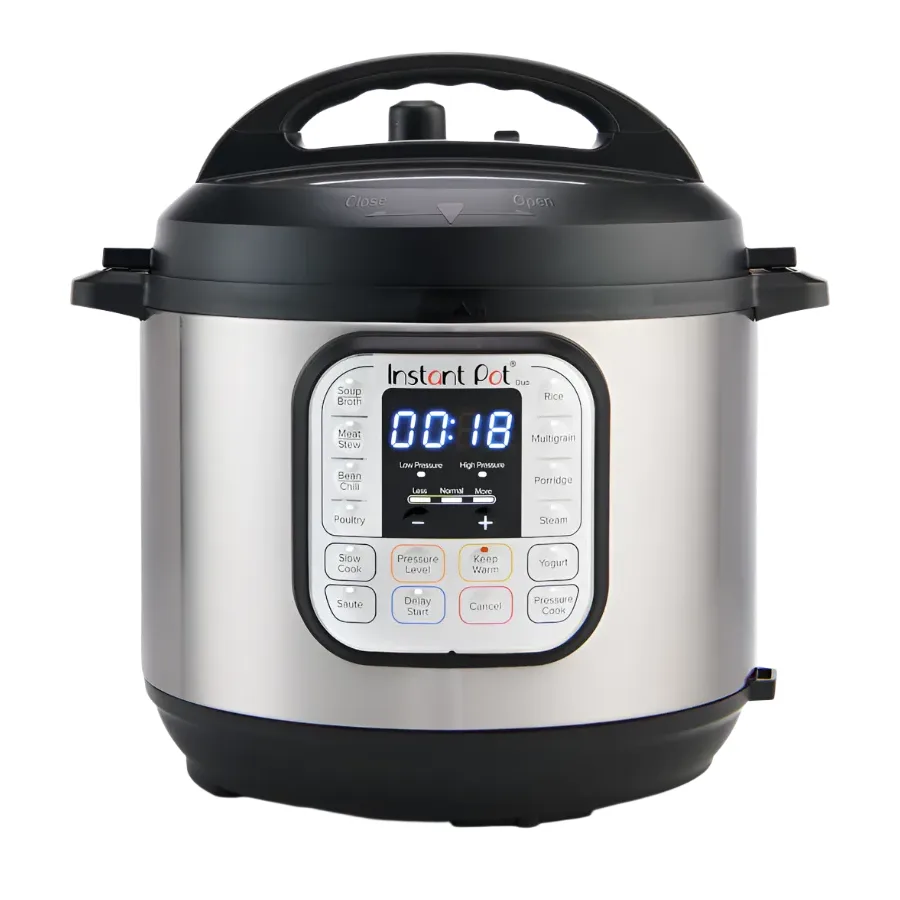
For a stainless inner pot that also replaces other appliances, the Instant Pot Duo 6QT is the practical value pick. Its uncoated 18/8 stainless steel inner pot has a tri-ply bottom. It pressure-cooks, sautés, steams, makes yogurt, cooks rice, warms, and slow-cooks. The tradeoff is that its slow-cook behavior differs from an oval crock.
Its slow-cook mode is not identical to an oval crock. Heat enters mainly from the base rather than wrapping around a stoneware insert, and familiar recipes may need adjustment. Buy it if pressure cooking is also useful; do not buy it solely because you expect an exact Crock-Pot substitute.
Best easy-release pot: GreenPan Elite 14-in-1
The GreenPan Elite 14-in-1 6QT Slow Cooker uses a ceramic nonstick coating that GreenPan identifies as PFAS-free. It sears, offers 14 presets, and has a dishwasher-safe six-quart pot.
Best for a large stainless batch: Instant Pot Duo Plus 8QT
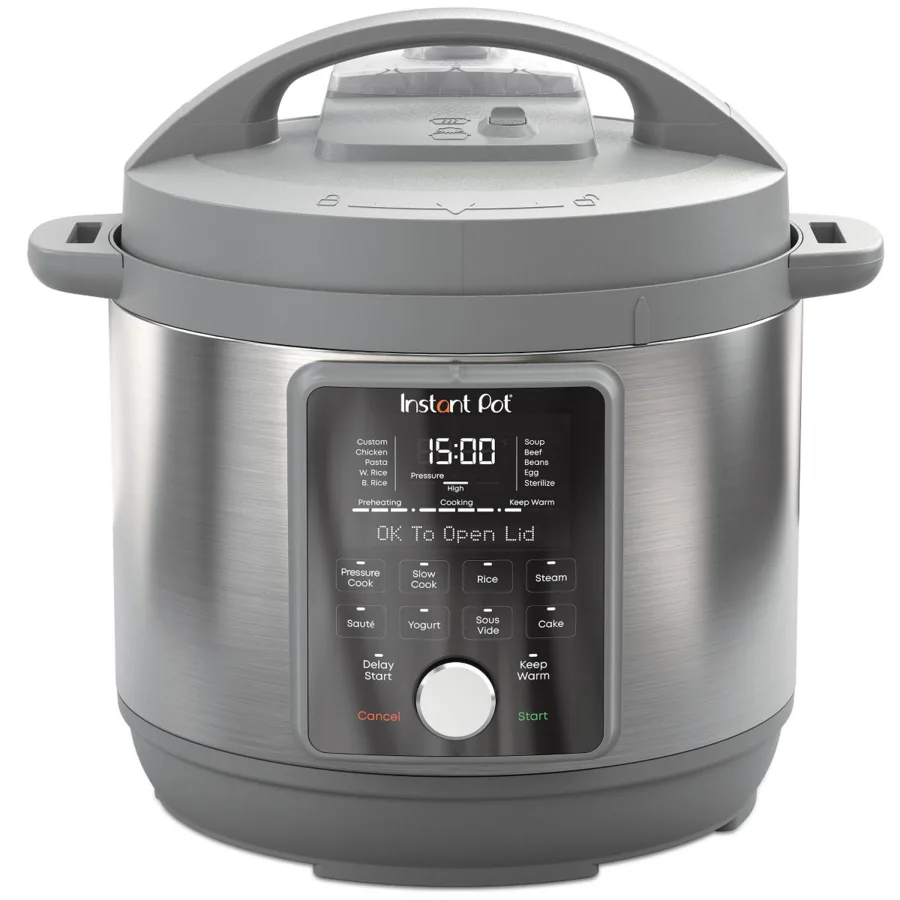
The Instant Pot Duo Plus 8QT uses an 18/8 stainless inner pot and adds pressure cooking, sautéing, steaming, warming, and slow cooking. It is useful for large batches, but its size is excessive for small meals.
Best familiar option: Crock-Pot 7-Quart Cook & Carry
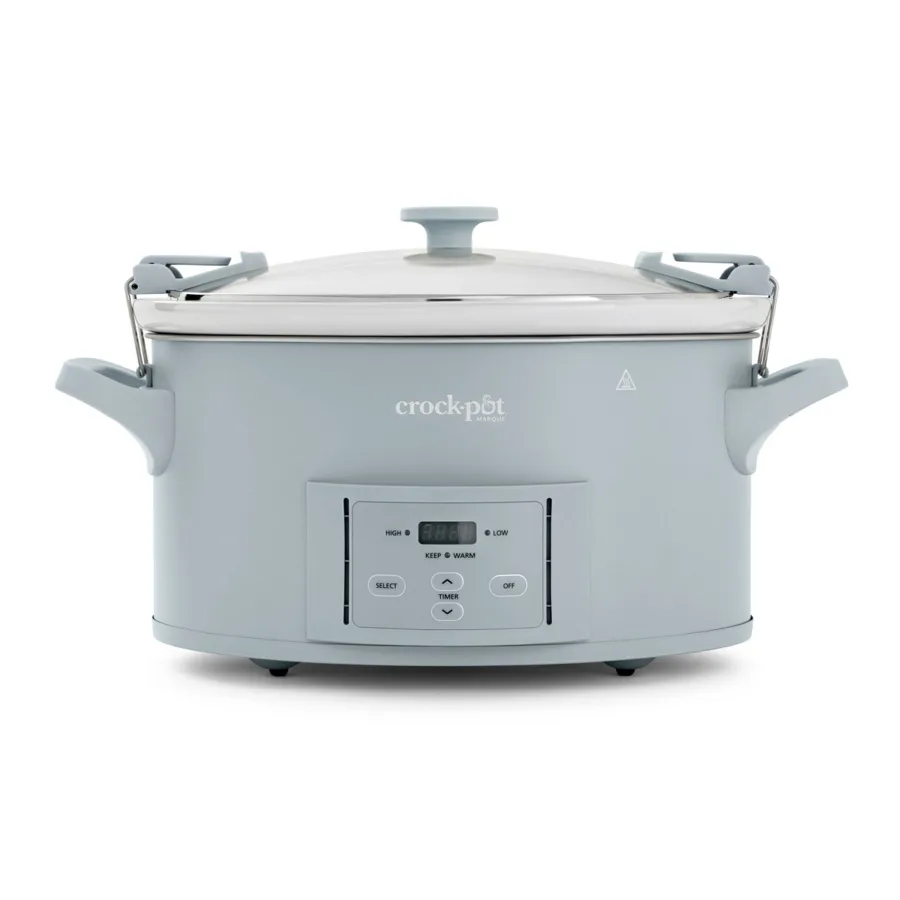
The Crock-Pot 7-Quart Cook & Carry uses a traditional stoneware crock, a material many buyers prefer to modern nonstick interiors. It is not an uncoated stainless option, so check the manufacturer’s current care and surface information.
Best for freezer portions: Crock-Pot 8-Quart Programmable
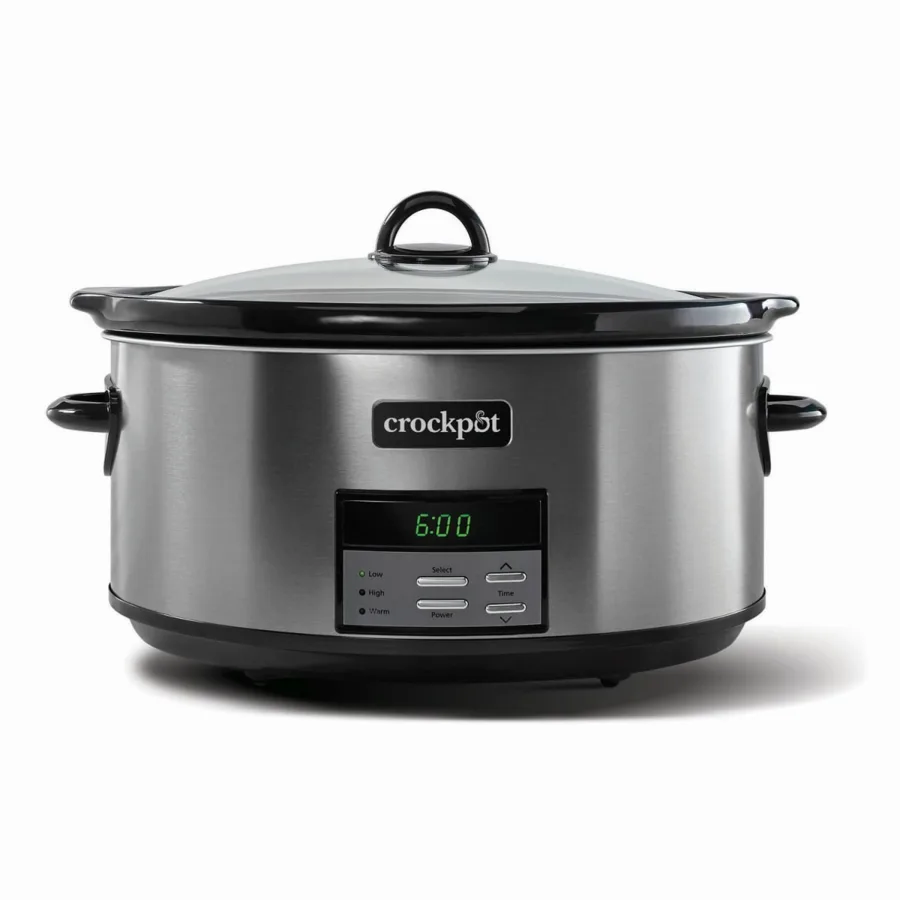
The Crock-Pot 8-Quart Programmable Slow Cooker gives a batch cook room for planned leftovers. Its traditional stoneware design is a straightforward alternative to coated multicookers, though the large crock needs a storage plan.
Best searing alternative: Ninja Foodi PossibleCooker Pro
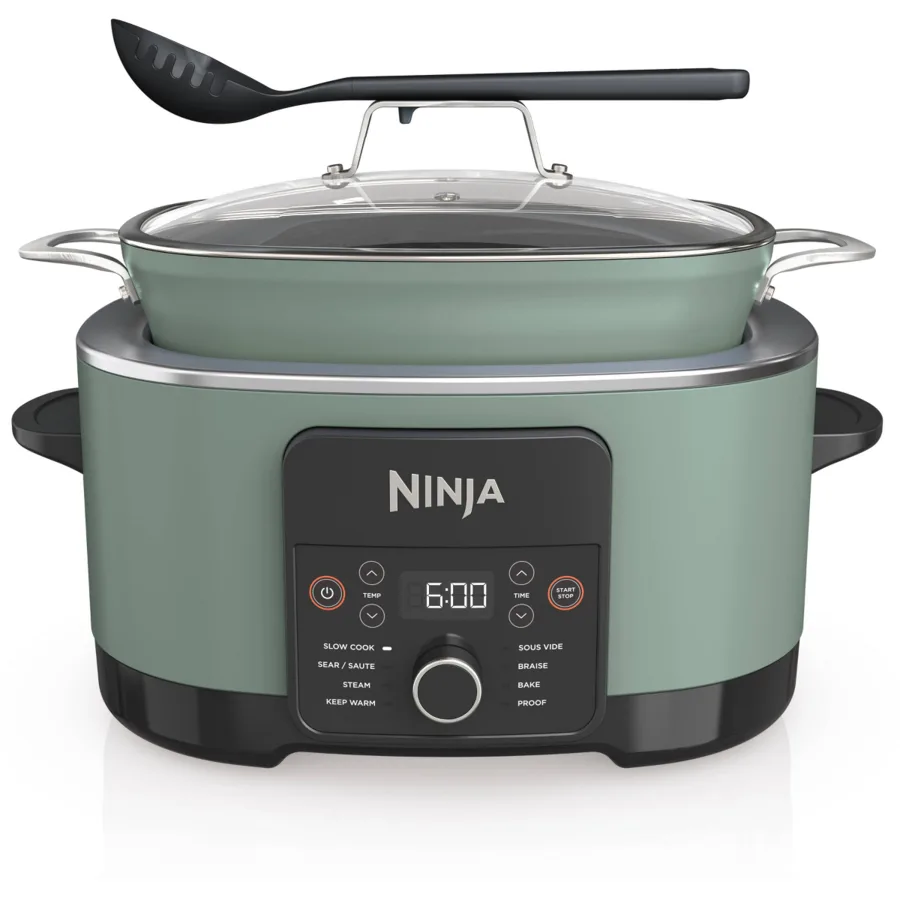
The Ninja Foodi PossibleCooker Pro 8.5QT belongs on this list as a comparison point, not as an uncoated pick. It sears and slow-cooks in one coated pot, so buyers avoiding coatings should choose one of the stainless or traditional-crock options instead.
This is still a coating, not bare metal. Use non-abrasive tools and replace a damaged insert. GreenPan is for buyers who accept that maintenance in exchange for easier release and cleanup.
How to compare material claims
- Identify the exact inner-pot surface. “Stainless housing” says nothing about what touches food.
- Separate uncoated stainless steel from PFAS-free ceramic nonstick; neither label makes every design choice equivalent.
- Check whether replacement pots are sold. A replaceable insert extends the useful life of the appliance.
- Avoid health claims that are not backed by a named standard or laboratory result.
Frequently asked questions
Is stainless steel harder to clean than ceramic nonstick?
It can require soaking when starch or protein sticks, but it also tolerates more robust cleaning and has no coating to wear through. A ceramic surface releases food more easily but needs gentler care.
Is a glazed stoneware crock unsafe?
This guide does not make that claim. Buyers with a specific concern should ask the manufacturer for current material and compliance documentation for the exact model.
Choose the material you can live with
Material-conscious buying starts by separating the cooking vessel from the lid, handles, probe, and seals. A stainless-steel vessel may avoid a food-contact coating, but it can be less forgiving when food sticks and may need more attention during browning. A ceramic-coated vessel can release food more easily, yet its coating still needs the care stated by the manufacturer. “PFAS-free” describes a particular claim. It does not mean the entire appliance is made from ceramic or that every component is coating-free.
The 360 Cookware set is the most direct choice for someone who wants uncoated stainless steel and accepts a more hands-on cooking style. Instant Pot is the practical value choice if you want a familiar multicooker format and stainless-steel cooking surface. GreenPan fits buyers who put easy release and broader functions ahead of an uncoated pot. Those are different priorities, not three versions of the same product.
Also check the cleanup plan before buying. Look for the manufacturer’s instructions for the removable pot, lid, gasket, and accessories. A material preference is easier to keep when the parts you touch most often are simple to wash and dry. If you share the kitchen, explain which surfaces should not be scrubbed with abrasive tools. Small care mistakes are more likely when the household treats every pot like ordinary stainless steel.
Finally, decide whether you need slow cooking at all or want one appliance to replace several. Extra programs can be useful, but they add controls and more instructions to learn. If your main meals are overnight oats, chili, or a weekly braise, a simpler design may be the better long-term fit even when it has fewer headline features.
A simple buying decision
Choose 360 Cookware when avoiding a food-contact coating is the requirement you will not compromise. Choose Instant Pot when value and a stainless cooking surface matter more than a traditional slow-cooker-only design. Choose GreenPan when release, cleanup, and extra modes justify accepting a ceramic coating. Keep those priorities separate when comparing marketing copy.
Before checkout, read the exact model’s current care and material information. The short list is based on documented product descriptions, not chemical testing. If a claim is unclear, treat it as unanswered rather than upgrading it into a health promise.
Before you order
Write down the surface you want to avoid and the compromises you accept. Uncoated stainless steel may mean more sticking and cleanup. A ceramic coating may make release easier but still needs careful treatment. A multicooker may cover more jobs but take longer to learn. Compare the exact model’s current material and care information, including the lid and seals, and keep the decision focused on documented features rather than broad health language.
Keep the shortlist honest
The material question should narrow the choice, not create a claim the sources do not support. Compare the cooking surface, the care burden, and the functions you will use. If two models meet the material requirement, choose by cleanup and routine rather than by the most reassuring-sounding label.
How we chose
We compared manufacturer disclosures and excluded products whose food-contact material was unclear. We did not perform chemical or hands-on testing. Sources include 360 Cookware, Instant, and GreenPan.
Recommendation
The 360 Cookware set is a costly answer to a narrow requirement: an uncoated stainless pot. For nearly everyone else, the Instant Pot Duo is the better value. Buy GreenPan if easy release matters more than avoiding coatings.